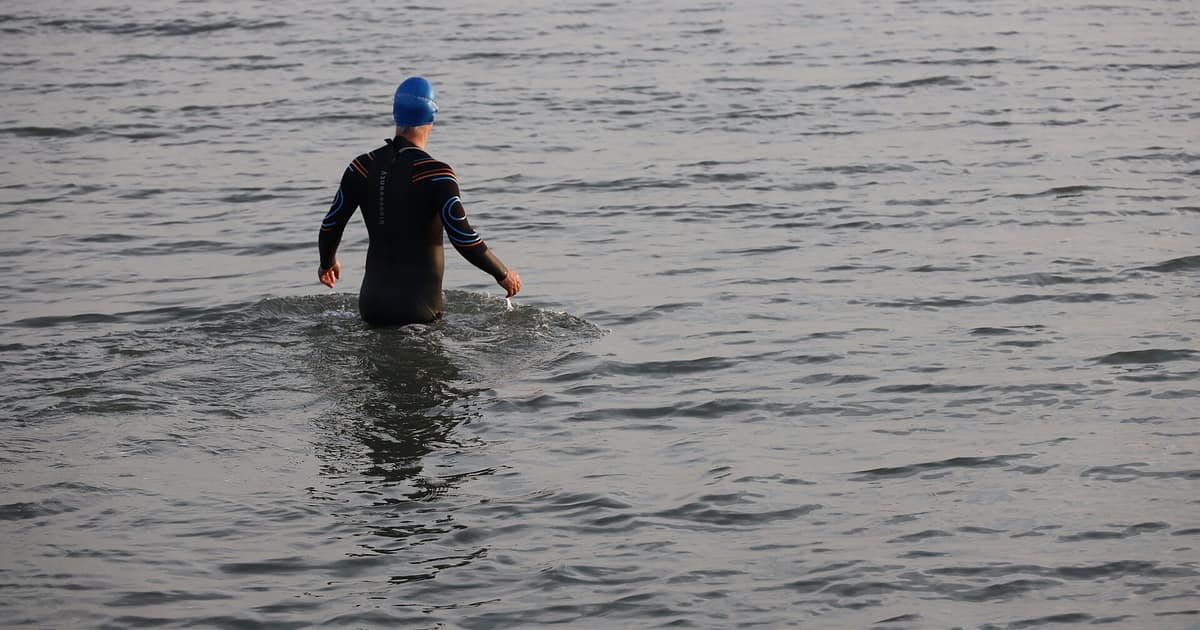

The sea around Britain is usually at its warmest in August. "Climatologically, August is the month of peak sea surface temperatures around the UK," as a Met Office scientist put it in the National Oceanography Centre's 2026 updates. For a coastal break that means late summer is your best bet, with the caveat that plenty of British sea stays cold enough to catch you out even then.
Is it the same everywhere?
No. Shallow water behaves differently from deep water, and the wind has a big say. The National Oceanography Centre notes that the English Channel and southern North Sea are relatively shallow, so warm surface water can sit there, while strong winds mix cooler water up from below and pull the surface temperature down.
The south-west has its own timing. A Met Office factsheet on the climate of South West England says the sea there is at its maximum in late summer and autumn, and coolest in late winter and spring. So a September week in Cornwall is not a wild idea, if the wind and swell cooperate.
What did summer 2026 show?
This year was far from typical, and it gives a useful sense of how far things can move. The Met Office reported a long-lasting marine heatwave at the start of July, with most affected waters at around 15 to 19°C and some already at levels usually seen in August.
Cefas wave buoys then recorded these readings:
| Buoy | Temperature | Date |
|---|---|---|
| Liverpool Bay | 22.3°C | 11 July |
| Thames Estuary | 21.9°C | 23 August |
| Poole Bay | 21.7°C | 9 July |
| Hastings | 21.4°C | 29 July |
| South-west of Isles of Scilly | 21.1°C | 9 August |
Do not take these as what to expect. Cefas says the Liverpool Bay reading was about 5.3°C above average for the site and time of year, which puts a more normal figure there at around 17°C. And the warmth was not shared equally, with the northern half of the UK mostly near average during the mid-August spell the National Oceanography Centre described.
How warm is warm enough?
There is no single swimming temperature, as people vary a good deal. The useful number is a safety threshold rather than a comfort one. The Met Office and HM Coastguard both describe cold water shock as a response to entering water below 15°C. Looking at the figures above, you can see how close to that line ordinary British water can sit, and it is worth remembering that the sea does not need to be below it for a cold plunge to feel unpleasant.
A warmer surface does not cancel the risk. In the same July warning, the Met Office said that warmer surface water does not remove the risk of cold water shock, because the water around the UK remains cold. Hot days are when people are most tempted to jump straight in, and that is exactly when the gap between air and water catches them out.
What does cold water shock do?
The sudden cooling of the skin causes an involuntary gasp, which can mean breathing in water. Breathing rate and heart rate both climb. The Met Office says the initial effects typically last around 90 seconds and can affect anyone, however fit or strong a swimmer they are. The advice from the Met Office, RNLI and Royal Life Saving Society is known as Float to Live:
- Lean back and try to float, with your head above water.
- Extend your arms and legs to help you stay afloat.
- Get your breathing under control.
- Only then call for help, or swim to safety if you can.
A rough calendar for planning
| Time of year | What to expect |
|---|---|
| Late winter and spring | The coolest water of the year, on the south-west pattern. Experienced, equipped swimmers only. |
| June and July | Warming, but you cannot assume much. Sunny air temperatures flatter the sea. |
| August | The usual peak around the UK, though it varies by place and by year. |
| September into autumn | Still near its peak in the south-west. Wind and swell have more say, and lifeguard cover may have changed, so check first. |
Getting in sensibly
HM Coastguard's beach advice covers most of it. Choose a lifeguarded beach if you can, and swim between the red and yellow flags. Black and white chequered flags mark the craft area, so stay out of it, and never go in under a red flag. HM Coastguard also suggests going in slowly rather than jumping, not swimming alone, keeping warm clothes ready for afterwards, and checking the forecast and tide times before you leave. A wetsuit helps with buoyancy and reduces the chance of cold water shock.
Temperature is not the only hazard. HM Coastguard calls rip currents a major cause of accidental drowning in the UK, and says they can look like a channel of flat, darker water between choppy patches. If one takes you, do not swim against it. Stand up and wade if you can, or swim parallel to the shore until you are free of it. An orange windsock means offshore or strong winds, which can make it hard to get back to the beach, so it is a poor day for an inflatable.
If you have travelled for the swim, leave a margin in the day. Our list of harbour towns by rail includes some that are a long way from anywhere, and the sea will still be there tomorrow. For the state of the water itself, a basic grasp of tide tables tells you whether your beach will be a long walk or a short one at the time you plan to go.
Sources opened for this entry
- National Oceanography Centre: inside the UK's unfolding marine heatwave
- Cefas: WaveNet data shows record-breaking sea temperatures
- Met Office: long-lasting UK marine heatwave (July 2026)
- Met Office: cold water shock
- HM Coastguard: sea swimming and cold water shock
- HM Coastguard: beach safety
Links last checked 8 November 2026. Rules, figures and timetables change, so follow the source for the current position.